
Diazepam (Valium)
Description
Diazepam (or Valium) is a popular benzodiazepine drug used mainly in the treatment of insomnia, anxiety, panic attacks, and sometimes for alcohol and opiate withdrawal. In the UK, it is used by prescription patients and individuals sourcing through the unregulated market, the latter being due to its relaxant properties which help individuals ‘chill out’ and feel more sociable.
In recent years, many diazepam pills have been missold , containing other drugs including novel benzos and opioids. Even pills seemingly branded with commercial names and bought in blister packs may have been pressed in illegal contexts, meaning they could have other substances within them. Getting their contents checked through drug checking services is key.
Tolerance to diazepam develops very quickly, requiring higher doses to achieve the same feeling. Regular and/or high dosing can lead to dependence, and potentially life-threatening withdrawal symptoms if stopped abruptly.
Desirable Effects
- Relaxation
- Sleepiness/sedation
- Occasional mild euphoria (happiness)
Undesirable Effects
- Drowsiness
- Dizziness/loss of co-ordination
- Headaches
- Blackouts/amnesia
- Respiratory depression in combination with opioids or other CNS depressants
What does it look like?
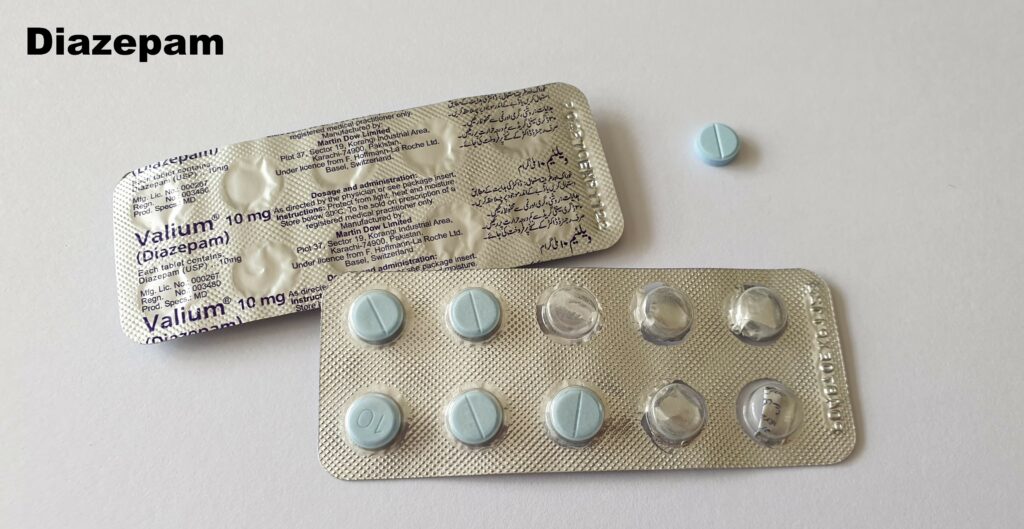
Tablets: Small, white or off-white tablets, usually 2mg when prescribed. Yellow or off-white tablets are usually 5mg. Blue tablets are usually 10mg
Oral solutions: 2 mg / 5 mL or 5 mg/5 mL (with sugar free versions available)
Injectable formulations: 5 mg/mL exist
Rectal tubes: also exist as 2mg/mL and 4mg/mL formulations
Method of Use
Orally: Swallowed as a tablet/capsule, drunk as an oral solution)
Snorted: The tablets are sometimes crushed and taken nasally
Injected: Injectable formulations as well as gelcaps are known to be used intravenously (injected into the limbs, groin or neck) or intramuscularly
Taken rectally: Using rectal tubes
Pharmacology
Diazepam is a GABA-A receptor positive allosteric modulator. What this means is that diazepam makes GABA – our brain’s main inhibitory neurotransmitter – more effective. GABA activates GABA-A receptors, which turn down the signals between nerve cells, thereby calming the brain and subsequently the mind.
Diazepam has a high oral bioavailability of around 80%, meaning it is efficiently absorbed when swallowed. Following oral administration, diazepam is quickly absorbed and metabolised by the body. Peak concentrations in plasma (proportionate to the dose) occur approximately 30 to 90 minutes after ingestion.
Diazepam has a duration of around 4–8 hours; however, the drug and its metabolites can stick around for between 1 and 10 days. Diazepam is metabolised by a range of CYP liver enzymes, including CYP3A4 – an enzyme blocked by grapefruit, combined contraceptive pill, and several SSRIs, antifungals, and antiretroviral medications. Diazepam’s metabolites are active benzos, which may be responsible for diazepam’s relatively long after-effects which can last between 12 to 36 hours. Additionally, the breakdown of diazepam becomes even slower in older age.
When diazepam is taken long term, the brain’s GABA receptors become desensitised, requiring higher doses for the same effect. It is advised that people taking diazepam long term do not stop suddenly (cold-turkey). Desensitised GABA receptors take a while to get back to baseline, meaning they will be unable to keep nerve signals in check without diazepam which may lead to dangerous withdrawal symptoms such as seizures. Instead, it is advised to taper gradually with medical supervision. For people dependent on other benzos, they may switch to diazepam as it stays in the blood longer (half life 30–56 hours), making tapering more gradual.
As diazepam turns down brain signals, combining the drug with other depressant drugs increases the risk of overdose. Drinking alcohol alongside diazepam can cause severe sedation, intoxication and blackouts. In combination with opioids, diazepam can slow down breathing to dangerous levels.
Harm Reduction
- Start low, go slow: Take a small amount and wait until you can feel the effects before taking more/anything else
- Try not to use alone: If something goes wrong, someone is there to get help
- Be careful mixing: Mixing diazepam with other depressants (like alcohol and opioids) potentiate the effects of the other strongly and unpredictably, increasing overdose risk – avoid if you can, otherwise take less of each, as they can increase the effects and risks
- Carry naloxone: Some counterfeit benzos in the UK have been found to contain strong opioids
- Test your stuff: Many diazepam pills tested in the UK didn’t contain diazepam, and you can’t see this by eye. Find out how to send a sample to WEDINOS for testing here: https://www.wedinos.wales or pick up some test strips at our Harm Reduction Hub
- Seek medical support for tolerance: If you’ve been prescribed diazepam and you notice a tolerance starting to develop (you need to keep taking more to get the same effect) speak to your doctor – don’t just start increasing your dose yourself.
- Don’t suddenly stop taking them, or you may start to experience symptoms of withdrawal: these can range from a return of your original symptoms (possibly even worse than before) to totally new symptoms
- Seek medical support for physical or psychological dependence: If you abruptly stop using benzodiazepines, your physical or psychological symptoms may deteriorate. Seek support from your doctor as soon as possible to discuss them and/or explore how you can safely change your dosage
History
Diazepam was invented by chemist Leo Sternbach in the 1950s, and marketed as Valium in 1963 by Hoffman La-Roche. By 1974, Valium became the most prescribed medication in the United States.
Benzodiazepines were popularised during the post-WWII period, a time of heightened global anxiety in the US and globally (BRP, 2022). Valium adverts from the 1960s and 70s were often targeted towards women, hence the nickname ‘Mother’s Little Helper’. These advertisements often depicted disgruntled housewives in need of ‘fixing’ through benzos.
Consumption and dependence emerged among prominent women including First Lady Betty Ford, triggering a ‘Valium Panic’ across mainstream media. Unlike many other anti-drug moral panics of the time, the Valium Panic was considered “quintessentially middle-class”; exceptionalising women and other people dependent on diazepam as distinct from more marginalised communities who use drugs (Herzberg, 2008).
The Valium Panic led to diazepam and other benzodiazepines becoming controlled substances in the UK under the Misuse of Drugs Act 1971; in the US under the Controlled Substances Act in 1975, and internationally in 1984 under the UN Convention of Psychotropic Substances.
At the turn of the 21st century, as diazepam prescribing in the UK declined, an unregulated market arose. Initially supplying people with diverted prescription benzos, further crackdowns on diazepam supply brought “street Valium” pills into circulation: pills made without regulatory oversight, often containing novel benzos and/or other drugs with limited clinical safety data. These street benzos – especially those containing etizolam or bromazolam – have been key contributors to benzo-related deaths in Scotland, which peaked during the 2020 COVID-19 pandemic. Subsequent restrictions on novel benzos appearing in the counterfeit supply have been followed by a conveyor belt of new benzos and mixtures being sold as diazepam on the unregulated market in the UK and globally. In 2022, several young people across the UK reported taking non-prescribed diazepam and other benzos to self-medicate for anxiety and other unmet mental health needs.
Law
- Class C
- Schedule 4 (1)
Possible offences
- Possession
- Maximum sentence – 2 years/fine/both
- Possession With Intent To Supply
- Maximum sentence – 14 years/fine/both
- Supply (including being concerned in supply, conspiracy to supply, aggravated supply and offer to supply)
- Maximum sentence – 14 years/fine/both
- Production
- Maximum sentence – 14 years/fine/both
In practice maximum sentences are rarely used, for more detailed and accurate information go to our sentencing page.