Description
Amphetamines are a type of stimulant that induce effects of euphoria, alertness, increased energy, appetite suppression and mental clarity. Some forms of amphetamines are prescribed for the treatment of Attention Deficit Hyperactivity Disorder (ADHD) and narcolepsy.
Amphetamine drugs come in different forms including:
- Amphetamine sulphate: An amphetamine salt usually sold as ‘speed’ on the unregulated market as a powder, paste or pill
- Freebase amphetamine: An oily substance usually stronger than the salt form
- Lisdexamphetamine mesilate: Most commonly prescribed amphetamine for ADHD under the brand name Elvanse (UK/EU) or Vyvanse (US, other)
- Dexamphetamine sulphate: Prescribed under the brand names Amfexa, Zenzedi and ProCentra, and previously Dexedrine and Dextrostat
- Mixed amphetamine salts: Prescribed under the brand names Adderall and Mydayis
Desirable Effects
- Increased energy
- Increased sex drive
- Analysis enhancement – perceived improvement of logical information processing or creative analysis
- Euphoria (intense happiness) at higher doses
Undesirable Effects
- Cardiovascular strain – raised heart rate and blood pressure leading to raised risk of arrhythmia
- Dehydration
- Hyperthermia – increased body temperature
- Reduced or suppressed appetite
- Sleep deprivation
- Physical or mental restlessness (like racing thoughts)
- Loss of co-ordination (at higher doses)
- Compulsive redosing
- Stimulant “overdose” (known as “overamping”) – increased heart rate, severe overheating and/or extreme anxiety
- A ‘crash’ or come-down – such as anxiety, increased irritability, lack of energy or motivation, depression
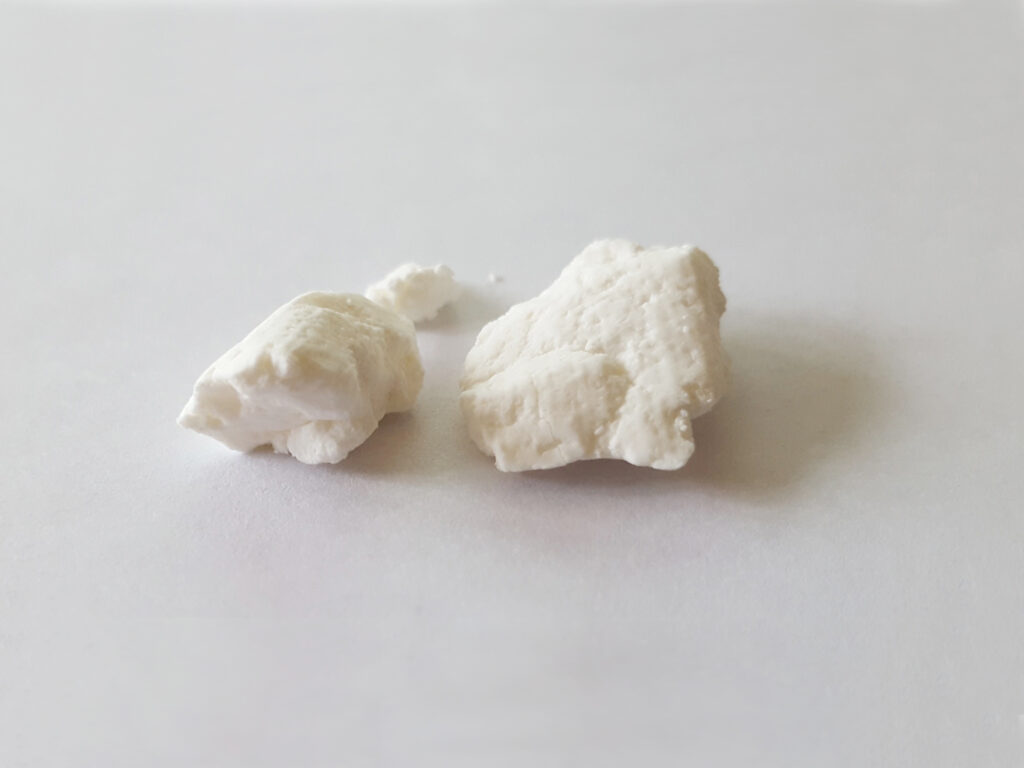
What does it look like?
The most common type of amphetamine is usually the salt form – usually a dull white or off-white colour.
They are also available in paste form, which is usually white to grey, or brown in colour; its feel can be damp and gritty. The paste form of amphetamine is usually dried out and adulterated with caffeine, sugar or other substances before being sold.
“Base” (referring to freebase amphetamine) is an oily insoluble substance.
Method of Use
Swallowed, snorted, smoked, boofed or injected.
Pharmacology
Amphetamine exerts its behavioural effects by modulating neurotransmitters in the brain, affecting the monoamine neurotransmitters dopamine, noradrenaline (norepinephrine) and, to a lesser extent, serotonin. Amphetamines mainly act by releasing dopamine and noradrenaline into the ‘synapse’ between nerve endings in the brain and their reuptake is either slowed down or inhibited.
The ‘come-down’ effect is consequently disorientating and unpleasant, interferes with the sleep pattern and can be implicated in impulsive and high-risk behaviours.
Amphetamines increase the amount of dopamine and noradrenaline levels in the synapse, leading to their characteristic stimulatory effects on the brain and heart. They do this by entering nerve cells primarily through the dopamine transporter (DAT) and noradrenaline transporter (NET), outcompeting their respective neurotransmitters and therefore blocking their reuptake. Once inside the neurons, amphetamines activate the trace amine-associated receptor 1 (TAAR1) and the vesicular monoamine transporter-2 (VMAT2). This leads to a blockage and reversal of monoamine neurotransmitter transport, essentially causing nerve cells to empty dopamine and noradrenaline into the synapse where they can activate their respective receptors.
At high doses, amphetamines also block the monoamine oxidase enzymes (MAO-A and MAO-B), slowing down the metabolism of monoamine neurotransmitters.
Altogether, the build up of these neurotransmitters at synapses in the brain lead to enhanced mental focus, greater wakefulness, and improved ability to concentrate, which is helpful for those with ADHD or narcolepsy.
Dexamphetamine has a stronger preference for DAT and TAAR1 than levoamphetamine, making it a more potent stimulant. Levoamphetamine on the other hand causes slightly more cardiac and peripheral (bodily) effects.
During the follicular phase of menstruation (when oestrogen levels are higher) amphetamine effects may be heightened, while effects seem to be reduced during the luteal phase (when progesterone levels are higher).
The oral bioavailability (how well it’s absorbed in the gut) and half-life (how long it sticks around in the body) of dexamphetamine varies with urine acidity. Generally, immediate release amphetamines reach peak concentrations in the blood after 3 hours, while extended release take 7 hours after dosing. Amphetamines are metabolised by enzymes such as CYP2D6, so taking them along with CYP2D6 inhibitors (e.g. some antidepressants, CBD, ritonavir, quinidine) can increase the levels of amphetamines in the body, potentially leading to overdose (commonly known as “overamping” with stimulants).
Lisdexamphetamine is a prodrug of dexamphetamine and is less sensitive to acidity when taken orally. Once absorbed into the blood, lisdexamphetamine is converted into dexamphetamine leading to a more gradual peak and longer duration. Additionally, unlike dexamphetamine, injecting or snorting lisdexamphetamine does not enhance the subjective effects.
History
Amphetamine was first synthesised in 1887, by the German chemist L. Edeleano and first marketed in the 1930s as Benzedrine, a decongestant inhaler. Because amphetamines increase energy levels and suppress appetite, they were widely used by states during World War 2 to give a ‘boost’ to service personnel. They were later widely used in the 1950s and 60s as weight loss medications. They are now prescribed to people with narcolepsy and, especially in the US, to people diagnosed with ADHD.
British troops used 72 million amphetamine tablets in the Second World War; amphetamine-type stimulants (known as ATS) are still widely used in the military. The bombing raids over Iraq during the Gulf war were allegedly undertaken by many pilots using the drug to increase alertness and endurance. Many famous writers have used amphetamines for inspiration; the history of thought, literature and music in the 20th Century would be quite different without their influence.
Law
Possible offences
- Possession
- Maximum sentence – 5 years/fine/both
- Possession With Intent To Supply
- Maximum sentence – 14 years/fine/both
- Supply (including being concerned in supply, conspiracy to supply, aggravated supply and offer to supply)
- Maximum sentence – 14 years/fine/both
- Production
- Maximum sentence – 14 years/fine/both
In practice, maximum sentences for amphetamines are rarely used. For more detailed and accurate information, go to our sentencing page.